Tanzania Safari Photography Tips: How to Take Stunning Wildlife Photos
These Tanzania safari photography tips will help you capture professional-quality wildlife photos during your safari adventure.Tanzania is one of the finest wildlife photography destinations on Earth. The extraordinary density of animals, the spectacular landscapes, the remarkable quality of the light particularly in the golden hours of dawn and dusk and the sheer variety of photographic opportunities make the Northern Circuit a paradise for photographers of every level, from smartphone users capturing their first close-up elephant to professional wildlife photographers who have spent entire careers pursuing the perfect shot. This guide will help every level of photographer make the most of their Tanzania safari camera moments.
Best Camera Equipment for Tanzania Safari Photography Tips
The question of which camera to bring to a Tanzania safari depends entirely on your level of photography interest and your budget. For dedicated photographers, a camera body capable of fast continuous shooting mirrorless or DSLR combined with a quality telephoto zoom lens of 100-400mm or 150-600mm is ideal for wildlife photography at safari distances. A 70-200mm lens can be surprisingly effective for larger animals at close range, while a 500mm or 600mm prime lens is the dream choice for distant subjects and small birds.
For casual photographers, a recent mid-range smartphone iPhone, Samsung Galaxy, or equivalent is capable of producing genuinely excellent wildlife photographs at close to medium range, particularly in the bright, even light of the golden hours. The key limitation of smartphones is their inability to reach distant subjects with any clarity for this reason, many visitors combine a smartphone for close-range shots and general scene-setting with a compact camera featuring a powerful optical zoom (30x or more) for more distant wildlife.Using the right gear is one of the most important Tanzania safari photography tips for getting sharp and detailed wildlife images.
Tanzania Safari Photography Tips: Golden Hour Guide
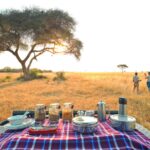
The quality of natural light is the single most important variable in wildlife photography, and Tanzania’s Northern Circuit delivers light of extraordinary quality during the golden hours the first hour after sunrise and the last hour before sunset. During these periods, the sun is low on the horizon, casting a warm, directional, orange-golden light that transforms even ordinary compositions into extraordinary photographs.One of the most valuable Tanzania safari photography tips is to always shoot during the golden hours for the best lighting.
This golden light brings out the texture of an elephant’s skin, the golden tones of a lion’s coat, the vivid red of a Maasai warrior’s shuka, and the luminous quality of the savannah grass in a way that the harsh, flat midday light simply cannot achieve. Always prioritise your morning and afternoon game drives scheduled to begin at dawn and continue through the golden hour as your primary photography windows. The middle of the day, when the light is harsh and flat, is better used for rest, writing, or exploring camp.
Tanzania Safari Photography Tips for Camera Settings
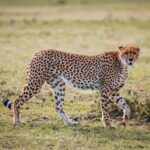
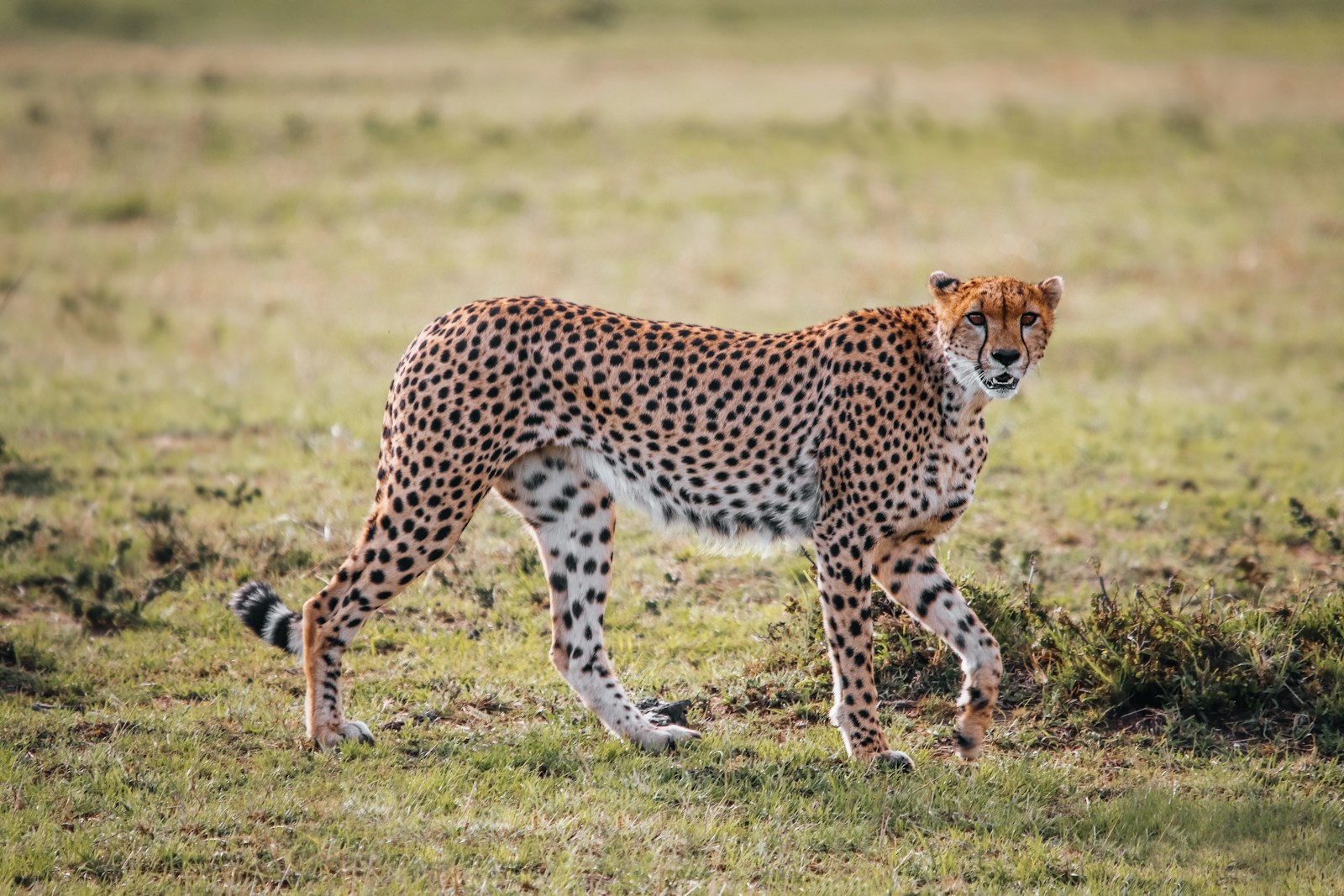
For moving wildlife subjects, the most important camera setting is a fast shutter speed you need to freeze the motion of a running cheetah, a leaping lion, or a bird in flight. As a general rule, use a shutter speed of at least 1/500th of a second for stationary or slow-moving large animals, 1/1000th of a second for animals in moderate motion, and 1/2000th of a second or faster for fast-running animals or birds in flight.
To achieve fast shutter speeds in the lower light of the golden hours, raise your ISO (sensitivity) setting modern cameras handle ISO 1600 to 6400 with acceptable noise levels, and many mirrorless cameras produce clean images at even higher ISO values. Use your camera’s continuous autofocus mode for moving subjects, and select continuous burst shooting so you capture multiple frames per second during peak action moments. The best wildlife action shots often come from the third or fourth frame of a burst, when the subject is perfectly positioned.
Vehicle Positioning and Etiquette
Your safari vehicle is your photography platform, and how it is positioned relative to your subjects makes an enormous difference to the quality of your images. Always communicate clearly and calmly with your driver-guide about your photography needs a good guide will work hard to position the vehicle for the optimal angle, with the sun behind you, the subject in good light, and a clean background.
Always remain seated when shooting through the roof hatch standing can make the vehicle appear larger and more threatening to wildlife, potentially disturbing the animals or causing them to move away. Use a beanbag rested on the roof hatch edge or the vehicle door window to stabilise your lens this is significantly more effective than handholding, particularly with heavy telephoto lenses at slow shutter speeds. Never insist on approaching closer to wildlife than your guide recommends your guide’s first responsibility is the safety of both the animals and the occupants of the vehicle, and their judgment on approach distances must be respected.
Composition and Storytelling Tips
Technical excellence is important in wildlife photography but composition and storytelling are what separate memorable images from merely competent ones. Rather than always positioning your subject dead-centre in the frame, use the rule of thirds: imagine dividing your image into nine equal parts with two horizontal and two vertical lines, and position your subject at one of the four intersection points. This creates a more dynamic and visually interesting composition.
Capture behaviour, not just portraits. A lion sleeping under a tree is a beautiful image, but a lion hunting, playing with its cubs, drinking, or interacting with other lions tells a story that is infinitely more engaging. Be patient stay with an interesting animal or group of animals and wait for behaviour to develop, rather than moving quickly from one subject to the next. And do not neglect the landscape wide-angle shots of the Serengeti plains at golden hour, the silhouette of a giraffe against the setting sun, the reflection of flamingos in the still water of Lake Manyara these are the shots that will define the visual story of your Tanzania adventure.
Tanzania offers wildlife photography opportunities that will challenge, inspire, and reward every level of photographer. Master your equipment before you arrive, learn to read the light, communicate clearly with your guide, and most importantly be patient. The greatest wildlife photographs are almost never taken in a hurry. They come to those who wait, who watch, who stay with their subjects, and who are ready when the extraordinary moment arrives. In Tanzania, extraordinary moments arrive every single day.