Serengeti Migration Tracking: Understanding the Great Wildebeest Migration
Serengeti migration tracking is the key to witnessing one of the most spectacular wildlife events on the planet. Every year, more than two million wildebeest, zebras, and gazelles travel across the vast Serengeti ecosystem in Tanzania and Kenya in search of fresh grazing and water.
This incredible journey, known as the Great Wildebeest Migration, is not a single event happening in one place. Instead, it is a year-round cycle influenced by rainfall, grass growth, and predator activity. Understanding Serengeti migration tracking allows travelers to plan their safaris at the right time and location to maximize wildlife encounters.
In this guide, we explain how the migration works, where the herds are found throughout the year, and how to plan the perfect safari around this extraordinary natural phenomenon.
What Is the Great Wildebeest Migration?
The Great Wildebeest Migration is the largest land-based animal movement on Earth. It involves massive herds traveling across the Serengeti–Mara ecosystem, covering approximately 800 to 1,000 kilometers each year.
The migration includes:
- Over 1.5 million wildebeest
- Around 200,000 zebras
- Hundreds of thousands of gazelles
- Numerous predators such as lions, hyenas, cheetahs, and crocodiles
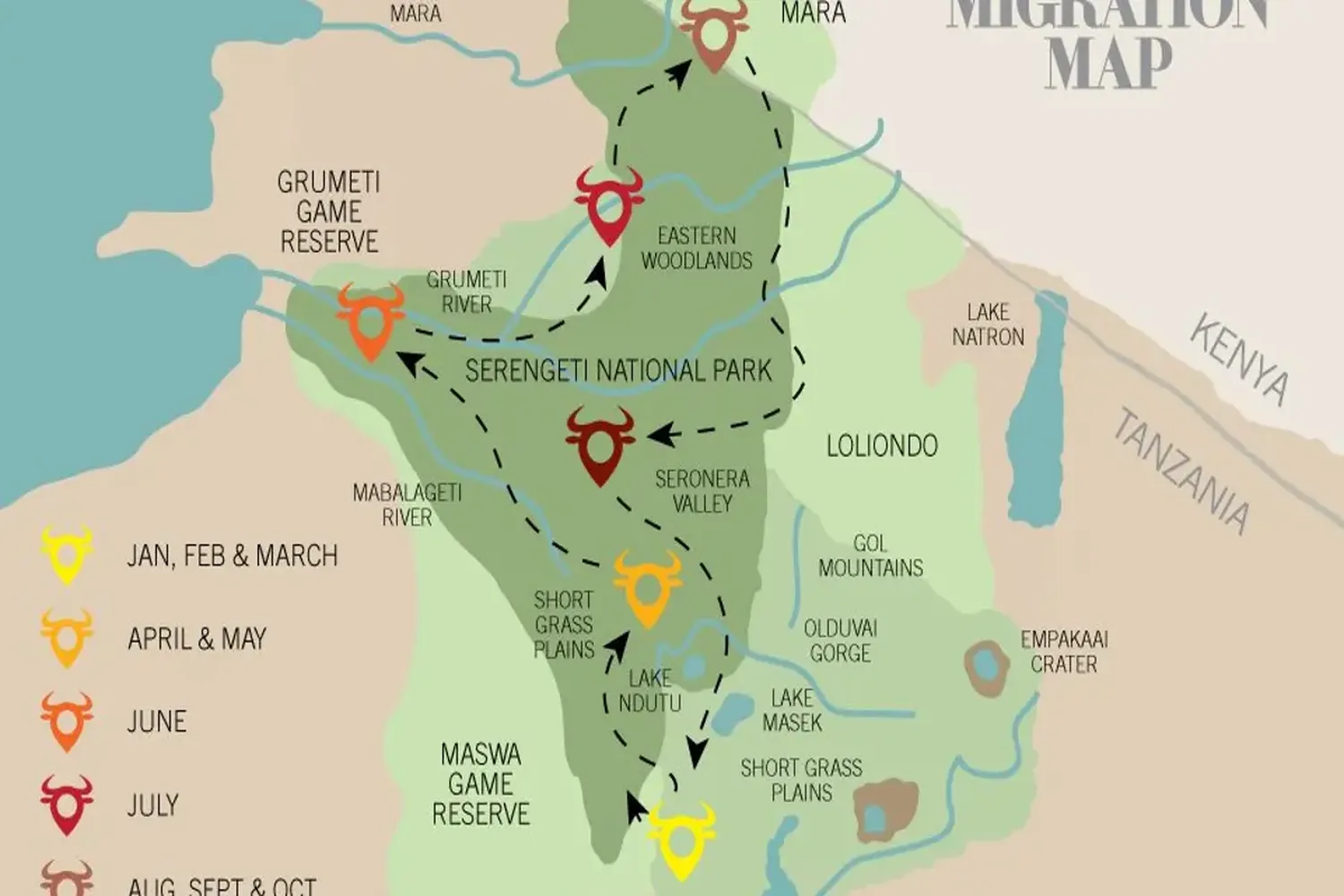
Rather than moving in a straight line, the herds follow a circular route dictated by rainfall and grazing conditions. This is why Serengeti migration tracking is essential for safari operators who want to position travelers close to the action.
The migration is not only about numbers—it is a story of survival, instinct, and the balance of nature.
Why Serengeti Migration Tracking Is Essential for Safari Planning
Many first-time safari travelers assume the migration is always visible in one location. In reality, the herds are constantly moving across different regions of the Serengeti ecosystem.
Professional guides rely on Serengeti migration tracking to monitor herd movements and adjust safari routes accordingly. This allows travelers to experience the migration at its most dramatic moments.
Accurate tracking helps safari planners:
- Locate the largest concentrations of animals
- Position safari camps near migration routes
- Adjust itineraries depending on seasonal rainfall
- Increase the chances of witnessing river crossings
Without proper tracking, visitors could easily stay in the wrong region while the migration takes place hundreds of kilometers away.
Serengeti Migration Tracking in January–March: Calving Season
The migration cycle begins in the southern Serengeti plains, particularly around the Ndutu area near the Ngorongoro Conservation Area.
During January and February, the short-grass plains become the center of the calving season. Up to 8,000 wildebeest calves are born every day at the peak of the season.
This abundance of newborn animals attracts large numbers of predators, creating intense wildlife drama. Lions, cheetahs, hyenas, and jackals closely follow the herds, making this period one of the best times for predator sightings.
The open plains and short grass also make photography easier, as visibility is excellent across the landscape.
Serengeti Migration Tracking in April–May: The Green Season
As the long rains arrive, the herds begin moving northwest through the central Serengeti.
During this period, the landscape transforms into lush green grasslands, and wildlife spreads out across the ecosystem. Although river crossings do not usually occur during these months, the scenery is beautiful and the parks are far less crowded.
Travelers visiting during this time benefit from:
- Lower lodge prices
- Fewer safari vehicles
- Dramatic stormy skies for photography
- Exceptional birdlife
For budget travelers, this can be one of the most rewarding times for Serengeti migration tracking.
Serengeti Migration Tracking in June–July: Grumeti River Crossings
As the dry season begins, the migration continues toward the western corridor of the Serengeti.
This stage brings the herds to the Grumeti River, where crocodiles wait in the water as thousands of animals attempt to cross. Although less famous than the Mara River crossings, the Grumeti crossings can be equally dramatic.
Dusty plains, golden sunsets, and massive herd formations create unforgettable safari scenes.
August to October: Mara River Crossings
This is the most famous stage of the Great Migration.
During these months, the herds gather in the northern Serengeti, near the border with Kenya’s Maasai Mara. To continue their journey, they must cross the powerful Mara River.
These crossings are unpredictable. Sometimes herds wait for hours or even days before attempting to cross. When they finally do, thousands of animals plunge into the water simultaneously while crocodiles lie in wait.
Watching a river crossing is one of the most thrilling wildlife experiences in Africa.
Key migration areas during this period include:
- Kogatende
- Lamai Wedge
- Northern Mara River regions
Serengeti Migration Tracking in November–December: Return of the Herds
With the arrival of the short rains, fresh grass begins growing in the southern Serengeti plains. The herds gradually move south again, completing the annual migration cycle.
This movement sets the stage for the next calving season, and the cycle continues year after year.
Best Locations for Serengeti Migration Tracking in Tanzania
Where you stay plays a huge role in your migration experience.
Permanent camps offer year-round comfort and are often located in central Serengeti.
Mobile camps, on the other hand, move with the herds and provide closer access to migration hotspots.
For travelers specifically interested in Serengeti migration tracking, mobile camps often provide the best opportunity to stay near the wildlife action.
Tips for Planning a Migration Safari
Planning around the migration requires flexibility and expert knowledge.
Key tips include:
- Travel with experienced local guides
- Spend at least 4–6 days in the Serengeti
- Choose camps located near seasonal migration routes
- Book early for peak river crossing months
Patience is also essential. Migration events are natural and unpredictable, and the best sightings often reward those who wait.
Serengeti migration tracking transforms an ordinary safari into an extraordinary wildlife experience. By understanding the seasonal movements of the herds and choosing the right locations, travelers dramatically increase their chances of witnessing nature’s greatest spectacle.
From the dramatic calving season in the southern plains to the breathtaking Mara River crossings in the north, the Great Migration offers unforgettable moments at every stage of the journey.
With careful planning and expert guidance, you can witness one of the most powerful natural events on Earth.