
Ngorongoro Crater — The Eighth Wonder of the World
- Home
- Ngorongoro Crater — The Eighth Wonder of the World
Request a Quote
Explore the Heart of Africa’s Wild
Book Your Dream Safari Today
Unforgettable wildlife moments are just a click away.
Step Into the World’s Most Perfect Wildlife Arena
Ngorongoro Crater Safari is one of the most extraordinary wildlife experiences in Africa. Located in northern Tanzania, the Ngorongoro Crater is often referred to as the eighth wonder of the world due to its unique ecosystem and breathtaking scenery. This natural caldera is home to an incredible concentration of wildlife, including the Big Five, making it one of the best places for game drives and unforgettable safari adventures.
There are few places on Earth where nature has constructed something so perfectly, so completely, that it feels almost intentional. The Ngorongoro Crater is one of them. Formed nearly three million years ago when a massive volcano collapsed inward upon itself, this extraordinary caldera has become one of Africa’s most celebrated wildlife destinations — a self-contained world where predator and prey exist in an ancient, unbroken cycle, watched over by the steep walls of the crater rim above.
At 260 square kilometers, the Ngorongoro Crater is the largest intact volcanic caldera in the world, and it is home to one of the highest concentrations of wildlife anywhere on the African continent. Lions, elephants, black rhinos, hippos, flamingos, and countless other species share this sunken paradise in remarkable density. For visitors, descending into the crater for the first time is a moment that never leaves you — a gradual reveal, as your vehicle winds down the crater wall and the full, breathtaking scale of the landscape opens before you.
This is not just a safari destination. This is a place of wonder.
A Geological Marvel Millions of Years in the Making
To understand the Ngorongoro Crater, you must first understand its origins. Approximately 2.5 to 3 million years ago, a colossal volcano — believed to have been as tall as Kilimanjaro — stood here on the edge of the Great Rift Valley. Over time, its magma chamber emptied and the summit collapsed, creating a vast, bowl-shaped depression known as a caldera. Unlike other volcanic craters, Ngorongoro did not erupt — it simply folded inward, sealing off a world within its walls.
The result is a crater floor that sits roughly 600 meters below the rim, spanning 19 kilometers at its widest point. The walls rise steeply on all sides, creating a natural enclosure that most wildlife — particularly the lions and rhinos — rarely leave. Over millennia, a complete and self-sustaining ecosystem developed within the crater. Rivers formed. Forests grew along the rim. A soda lake — Lake Magadi — appeared at the crater’s heart, drawing flamingos by the thousands.
Today, the Ngorongoro Crater is recognized as a UNESCO World Heritage Site, a Biosphere Reserve, and one of Africa’s Seven Natural Wonders. It is managed by the Ngorongoro Conservation Area Authority (NCAA) and sits within the larger Ngorongoro Conservation Area — a multiple land-use zone that also encompasses Olduvai Gorge, the Ndutu plains, and vast Maasai pastoral lands.
Wildlife in the Ngorongoro Crater
The Ngorongoro Crater is one of the best places in Africa — and arguably the world — to see the Big Five within a single day. The combination of rich grasslands, fresh water, forest, and a soda lake creates a diversity of habitats that supports an extraordinary range of species in a remarkably compact area.
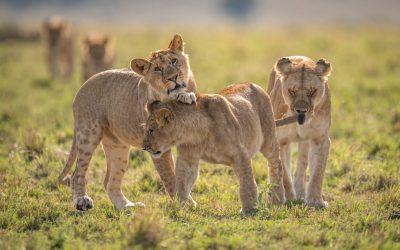
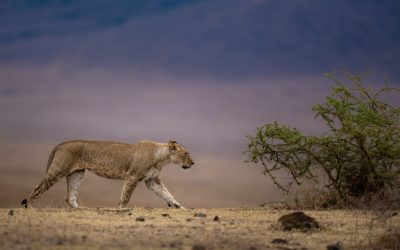
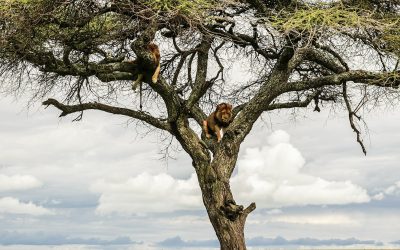
Lions are everywhere in the crater. With an estimated 60 to 70 lions residing permanently within the caldera, sightings are almost guaranteed. The crater’s lion population is also notable for its black-maned males, a genetic trait shaped by the crater’s isolated breeding environment. Watching a pride sprawl across a kopje or stalk through the tall grass of the crater floor is one of the defining images of a Ngorongoro safari.
Black Rhinoceros — one of the most critically endangered mammals on Earth — survive in the Ngorongoro Crater in small but significant numbers. The crater represents one of the last places in Tanzania where you have a realistic chance of encountering a wild black rhino, making every sighting a genuinely rare and precious experience.
Elephants move through the crater in impressive numbers, though most are older bulls. The steep crater walls make it difficult for family herds with young calves to descend, so the population within the crater is somewhat skewed toward large, solitary males — some with spectacular tusks.
Cape Buffalo gather in huge herds on the crater floor, often numbering in the hundreds. These dense, dark masses moving across the golden grass are a photographer’s dream and a lion’s opportunity.
Hippos wallow in the Ngoitokitok Springs and the shallow pools of the crater floor, often surrounded by Egyptian geese, yellow-billed storks, and other water birds.
Cheetah and Leopard are also present in the crater, though less frequently seen than lions. Patient observers are sometimes rewarded with cheetah sightings in the open grasslands and leopard glimpses in the forested areas near the crater walls.
Flamingos gather in their thousands along the shores of Lake Magadi, turning the edges of the soda lake a vivid, shimmering pink — one of the most visually striking sights in all of Africa.
Beyond the flagship species, the crater supports wildebeest, zebra, Grant’s and Thomson’s gazelles, eland, warthog, spotted hyena, golden and black-backed jackals, serval cats, bat-eared foxes, and over 500 species of birds including the kori bustard — the world’s largest flying bird.
The Ngorongoro Conservation Area — More Than Just the Crater
While the crater itself is the undisputed centerpiece, the broader Ngorongoro Conservation Area is a destination of extraordinary depth and diversity. Covering 8,292 square kilometers, the NCA encompasses multiple ecosystems, archaeological sites of global significance, and the living culture of the Maasai people.
The highlands along the crater rim are draped in ancient montane forest, home to buffalo, elephant, leopard, and an incredible variety of bird species. The forests of Lerai and Laiyai within the crater itself support their own distinct wildlife communities. To the west, the NCA merges with the Serengeti ecosystem, and the Ndutu plains — famous for their calving season spectacle from December to March — fall within its boundaries.
The Ngorongoro Conservation Area is also the only protected area in Tanzania where human habitation is permitted alongside wildlife. The Maasai, who have coexisted with wildlife in this landscape for centuries, continue to graze their cattle across the conservancy. Encounters with Maasai herders on the crater rim or across the highland plains are a reminder that this landscape is not a museum — it is a living, breathing place shaped by both nature and human culture across thousands of years.
Olduvai Gorge — Where Humanity Began
Within the Ngorongoro Conservation Area lies one of the most important paleoanthropological sites in the world. Olduvai Gorge — known as the Cradle of Mankind — is where pioneering archaeologists Louis and Mary Leakey made a series of extraordinary discoveries in the mid-twentieth century that fundamentally changed our understanding of human evolution. Fossils found here, including those of Homo habilis and Paranthropus boisei, date back nearly 2 million years.
A visit to Olduvai Gorge is a powerful addition to any Ngorongoro safari — a chance to stand at the very edge of a canyon where early hominids once walked, and to reflect on the deep, unbroken thread of life that connects us to this landscape. The on-site museum presents the story of these extraordinary discoveries with clarity and depth.
The Maasai — Guardians of the Land
No visit to the Ngorongoro Conservation Area is complete without an acknowledgment of the Maasai people, whose presence gives the landscape much of its cultural soul. Semi-nomadic pastoralists, the Maasai have lived alongside lions, elephants, and wildebeest for generations, managing their herds across the same plains where wildlife roams. Their distinctive red shukas, elaborate beadwork, and deeply held traditions are an integral part of the Ngorongoro experience.
We offer optional cultural visits to Maasai villages (known as bomas) in the NCA, providing an opportunity to learn about daily life, traditional medicine, music, and the ancient pastoral customs that have shaped this landscape. These visits are conducted with full community consent and benefit, and represent a genuine cultural exchange rather than a performance.
Best Time to Visit Ngorongoro Crater
Unlike many safari destinations that vary significantly by season, the Ngorongoro Crater offers outstanding wildlife viewing year-round. The enclosed nature of the caldera means that animals do not migrate out of the crater in the way they do across the open Serengeti plains — residents stay, and the wildlife density remains consistently high throughout the year.
That said, there are seasonal nuances worth considering. The dry season from June to October brings clear skies, drier roads, and animals concentrated around the permanent water sources on the crater floor — making game viewing particularly reliable. The wet season from November to May brings lush green landscapes and excellent birdwatching, including large flocks of migratory birds that arrive between November and April. The crater rim can be misty and cool during the wet season, adding an almost otherworldly atmosphere to the forest walks and rim-top sunrises.
February and March, when the Ndutu calving season peaks just to the west of the crater, offer the possibility of combining a crater day with the extraordinary spectacle of thousands of wildebeest calves taking their first steps on the southern plains.
Getting to Ngorongoro Crater
The Ngorongoro Crater is located approximately 180 kilometers west of Arusha along the well-maintained northern safari circuit road. The drive from Arusha typically takes three to four hours, passing through the vibrant market town of Mto wa Mbu and offering views of the Great Rift Valley escarpment. Many visitors combine Ngorongoro with Lake Manyara National Park en route, making for a rewarding two-destination day or overnight itinerary.
Light aircraft access is also available, with a scheduled airstrip at Manyara and charter flights possible to the crater rim area, reducing travel time significantly for those on tighter itineraries.
Accommodation at Ngorongoro
Accommodation in and around the Ngorongoro Conservation Area ranges from iconic crater rim lodges with panoramic views over the caldera to comfortable tented camps in the surrounding highlands and forest. Staying on the rim allows you to wake up above the clouds, descend into the crater at dawn before the day-trippers arrive, and return to a warm fire and a spectacular sunset view at the end of the day — an experience that is genuinely unlike anything else in African safari travel.
Overnight stays within the crater floor are not permitted, so a well-positioned rim lodge is essential for making the most of your time here. We carefully select accommodation partners who combine exceptional positioning with sustainability standards and authentic hospitality.
Our Ngorongoro Safari Experiences
We design every Ngorongoro itinerary to give you the deepest, most immersive experience possible. Whether you are combining the crater with a Serengeti safari, focusing purely on the NCA’s extraordinary range of ecosystems and cultural sites, or seeking a luxury private crater floor experience, Serengeti Wander Tours will craft an itinerary that exceeds your expectations.
Early morning descents — before the crowds arrive — are our strong recommendation, and our guides’ intimate knowledge of the crater floor, its wildlife patterns, and its seasonal secrets ensures that every game drive delivers something extraordinary.
Conservation and Community at Ngorongoro
The Ngorongoro Conservation Area is one of Africa’s most complex and carefully managed multi-use landscapes. Balancing the needs of wildlife, the Maasai community, and the tourism industry is an ongoing and delicate process. At Serengeti Wander Tours, we support this balance by partnering exclusively with operators and lodges that prioritize community benefit and environmental responsibility. A portion of every booking contributes directly to conservation and community projects within the NCA.
Ready to Descend Into the Crater?
There is a moment, as your vehicle crests the crater rim and begins its descent into the caldera below, when everything else falls away. The noise of the world disappears. The scale of what you’re entering becomes suddenly, overwhelmingly real. And you understand — perhaps for the first time — what it means to be a small and grateful visitor in a place of ancient, unbreakable wildness.
The Ngorongoro Crater is waiting. Let us take you there.
Explore our Ngorongoro safari packages or contact our team to begin planning your journey into Africa’s most extraordinary natural wonder.
Serengeti Wander Tours | Based in Arusha, Tanzania | www.serengetiwandertours.com
Frequently Asked Questions — Ngorongoro Crater
How long should I spend at the Ngorongoro Crater? A full day on the crater floor (approximately six to seven hours) is the standard visit, but we strongly recommend spending at least two nights on the rim to allow for an early morning descent before other vehicles arrive and a second game drive that lets you linger without time pressure.
Is the Ngorongoro Crater part of the Serengeti? No — the crater is separate from Serengeti National Park, though both fall within the larger Serengeti-Mara ecosystem. The Ngorongoro Conservation Area borders the Serengeti to the east and is administered separately by the NCAA.
Can I walk in the Ngorongoro Crater? Walking on the crater floor is not permitted for safety reasons. All game viewing within the caldera is done by vehicle. However, guided walks are available on the crater rim and in the surrounding highland areas.
Will I see the Big Five in the crater? The Ngorongoro Crater offers one of the best opportunities in Africa to see all five of the Big Five — lion, leopard, elephant, buffalo, and black rhino — in a single day. Rhino sightings are not guaranteed but are more likely here than almost anywhere else in Tanzania.
How many vehicles are allowed in the crater at one time? The NCAA imposes daily vehicle limits to minimize environmental impact. Early arrival is strongly recommended to secure access and enjoy the crater before it becomes busier later in the morning.
Is Ngorongoro suitable for children? Yes. The crater offers enclosed, vehicle-based game viewing that is well-suited to families. The density of wildlife means children are almost always engaged and excited. We recommend it highly as part of a family safari itinerary.
What is the altitude at Ngorongoro? The crater rim sits at approximately 2,300 meters (7,500 feet) above sea level, making it noticeably cooler than the Serengeti plains. Mornings and evenings can be cold, so warm layers are essential even during the dry season.
Photo Gallery:
Find Inspiration for
Your Next Tanzania Safari
Explore a range of private and group safari packages tailored to families, couples, and adventurers seeking unforgettable wildlife encounters.
- From: $2105 / person
- From: $2100 / person
- From: $2100 / person
- From: $4105 / person
- From: $5335 / person
- From: $4105 / person
- From: $3250 / person
- From: $2720 / person