
Mount Kilimanjaro — Roof of Africa
- Home
- Mount Kilimanjaro — Roof of Africa
Request a Quote
Explore the Heart of Africa’s Wild
Book Your Dream Safari Today
Unforgettable wildlife moments are just a click away.
The Mountain That Defines a Continent
Mount Kilimanjaro Trek is one of the most iconic adventures in the world, taking you to the summit of Mount Kilimanjaro, the highest mountain in Africa. Rising above the plains of Tanzania, this legendary peak offers breathtaking scenery, diverse ecosystems, and a rewarding challenge for climbers of all levels. Whether you choose a scenic route or a classic path, trekking Kilimanjaro is an unforgettable journey to the “Roof of Africa.”
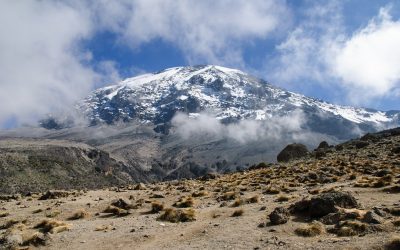
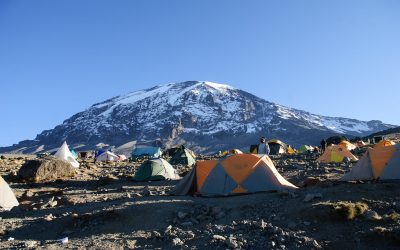
There is no mountain in Africa like Kilimanjaro. Rising from the flat savannah plains of northern Tanzania to a height of 5,895 meters above sea level, it is the highest peak on the African continent, the world’s tallest free-standing mountain, and one of the most iconic natural landmarks on Earth. Its snow-capped summit — Uhuru Peak — floats above the clouds like a mirage, visible from hundreds of kilometers away across the Tanzanian and Kenyan plains, a perpetual snow dome hovering over equatorial Africa in a display of geological improbability that has captivated travelers, explorers, and adventurers for centuries.
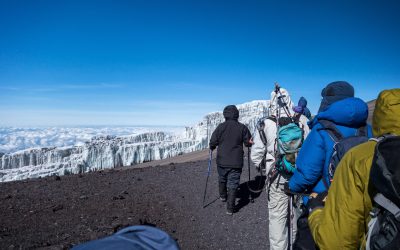
Kilimanjaro is a dormant stratovolcano — actually a complex of three volcanic cones, Kibo, Mawenzi, and Shira — that last erupted approximately 360,000 years ago. Its summit glacier, though dramatically reduced by climate change over the past century, remains one of the defining visual symbols of Africa. Scientists estimate that if current warming trends continue, the glacier could disappear within decades — making a climb to Uhuru Peak not just a personal achievement but a witness to a natural wonder that future generations may not be able to experience.
For thousands of people every year, standing on the summit of Kilimanjaro at sunrise — watching the shadow of the mountain stretch across the clouds far below, with the curvature of the Earth visible on the horizon — is the single most profound physical and emotional experience of their lives. It is a mountain that demands everything you have. And it gives back immeasurably more.
Climbing Kilimanjaro — What You Need to Know
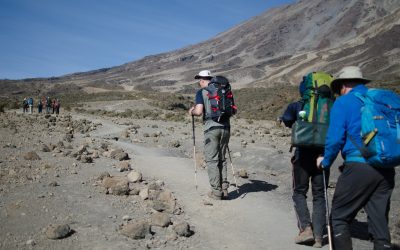
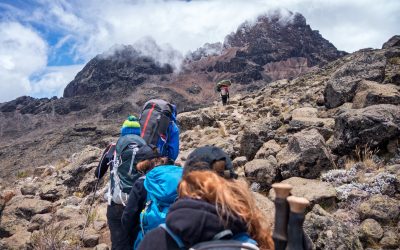
Unlike most of the world’s great mountains, Kilimanjaro requires no technical climbing skills or equipment. There are no ropes, no crampons, no ice axes required on the standard routes. What it does require — and demand with uncompromising insistence — is physical fitness, mental determination, and above all, the willingness to go slowly.
Altitude is Kilimanjaro’s defining challenge. The mountain rises so dramatically and so rapidly from the plains below that altitude sickness is the primary cause of failed summit attempts and the primary reason why an experienced, properly accredited guide service is not merely recommended but essential. Acclimatization — the process by which your body adjusts to the reduced oxygen levels of high altitude — takes time, and the single most important factor in summit success is choosing a route that allows adequate time for this process.
At Serengeti Wander Tours, all our Kilimanjaro climbs are led by certified, highly experienced mountain guides with deep knowledge of the mountain’s routes, weather patterns, and altitude management protocols. Our guides carry pulse oximeters and supplemental oxygen for emergency use, and our assistant guide to client ratios ensure that every climber receives attentive, personalized support throughout the ascent.
The Routes — Choosing Your Path to the Summit
Kilimanjaro offers seven established climbing routes, each with its own character, scenery, level of difficulty, and optimal acclimatization profile. Choosing the right route is one of the most important decisions of your Kilimanjaro experience, and our team will help you select the one that best matches your fitness level, time available, and personal preferences.
The Marangu Route — known as the “Coca-Cola Route” for its relative accessibility — is the only route with permanent hut accommodation rather than tented camps. It is the most heavily used route on the mountain and follows a relatively direct line to the summit. The standard five-day itinerary is considered too short for adequate acclimatization, and we strongly recommend the six-day option. Marangu is a good choice for climbers on a tight schedule who prefer sleeping in huts.
The Machame Route — the “Whiskey Route” — is the most popular route on the mountain and widely regarded as one of the most scenic. It approaches the summit via the Shira Plateau and the spectacular Barranco Wall, offering dramatic and varied landscapes throughout the ascent. The seven-day Machame itinerary provides excellent acclimatization and significantly higher summit success rates than shorter options. We recommend Machame highly for first-time Kilimanjaro climbers seeking a balance of scenery, challenge, and acclimatization quality.
The Lemosho Route is our personal recommendation for the best overall Kilimanjaro experience. Approaching from the west across the remote Shira Plateau, Lemosho offers the most diverse and spectacular scenery on the mountain, the highest summit success rates due to its excellent acclimatization profile, and significantly lower traffic than Machame or Marangu. The eight-day itinerary is ideal, though seven days is also available. Lemosho is the route of choice for those who want the full Kilimanjaro experience.
The Rongai Route approaches from the north — the only route to do so — and offers a more remote and less-crowded experience with views into Kenya’s Amboseli plains on the ascent. It is a slightly less scenic route than Lemosho or Machame on the lower slopes but provides excellent acclimatization on the longer six-day itinerary and is particularly recommended during the wet season when the northern slopes are drier than the southern.
The Shira Route begins at a higher elevation than other routes, driving to the Shira Plateau rather than walking up to it, and as a result provides less acclimatization time in the lower altitude zones. It is generally not recommended for its acclimatization profile, though the plateau itself is spectacular.
The Umbwe Route is the most direct and most challenging route on the mountain — a steep, demanding ascent through dense forest that offers little acclimatization time. It is recommended only for very experienced, fit climbers who have previously been at high altitude.
The Northern Circuit Route is the longest route on the mountain, circumnavigating almost the entire summit cone over nine to ten days. It offers the highest summit success rates of any route, the most remote and wilderness-oriented experience, and spectacular 360-degree views of the mountain from all sides. It is the ultimate Kilimanjaro experience for those with adequate time and a desire for something truly exceptional.
The Ecological Zones — A Journey Through Five Worlds
One of Kilimanjaro’s most extraordinary qualities is the journey through five distinct ecological zones that every climber makes on the ascent — a vertical traverse from tropical Africa to arctic tundra within the space of a few days’ walking.
The Cultivation Zone at the mountain’s base is a landscape of coffee and banana farms, traditional Chagga homesteads, and rich red soil — the cultivated heart of the Kilimanjaro region.
The Montane Forest Zone begins at around 1,800 meters and extends to approximately 2,800 meters — a dense, humid forest of giant Podocarpus trees, dripping moss, and dense undergrowth, inhabited by colobus monkeys, bushbuck, and an exceptional variety of forest birds.
The Heath and Moorland Zone from 2,800 to 4,000 meters is a landscape of giant heather, giant groundsels, and giant lobelias — the extraordinary Afroalpine plants that have evolved to survive the extreme conditions of high altitude on the equator, growing to sizes unimaginable at lower elevations.
The Alpine Desert Zone from 4,000 to 5,000 meters is a stark, cold, largely barren landscape of volcanic rock and thin air — a world of dramatic sunrises, freezing nights, and the first intimations of summit altitude.
The Arctic Zone above 5,000 meters encompasses the summit crater, the remnant glacier, and the exposed rock of Uhuru Peak itself — a world of ice, rock, and sky at the top of Africa, reached by very few and forgotten by none.
Summit Night — The Defining Moment
Every Kilimanjaro climber’s story culminates in the same extraordinary experience — summit night. Beginning around midnight from high camp (Barafu or Crater Camp depending on the route), climbers ascend through the biting cold of the alpine desert by headlamp, their breath coming in slow, deliberate gasps in the thin air, placing one foot carefully in front of the other in the darkness. The summit ridge — Stella Point on the crater rim, then the final walk to Uhuru Peak — is reached as the sky begins to lighten in the east.
And then, if the mountain is kind and the skies are clear, the sun rises. The shadow of Kilimanjaro stretches across the clouds far below. The glacier glows pink and gold. The curvature of the Earth becomes visible on the horizon. And you are standing on the Roof of Africa — 5,895 meters above sea level, higher than any other point on the continent, with the whole of East Africa spread out below you in the most profound silence you have ever experienced.
It is a moment that changes people. We have seen it many times, and it never becomes ordinary.
Success Rates and Acclimatization
The overall summit success rate on Kilimanjaro varies significantly by route and itinerary length. Short five- and six-day routes have success rates as low as 50–60%. Longer, well-acclimatized routes such as Lemosho and the Northern Circuit have success rates of 85–95% with experienced operators. At Serengeti Wander Tours, our commitment to longer itineraries, experienced guides, altitude monitoring, and conservative pacing policies consistently delivers summit success rates above the industry average.
We never rush our climbers. The mountain will still be there tomorrow. The summit will wait for the climber who is patient.
Combining Kilimanjaro With a Safari
Many of our clients combine a Kilimanjaro climb with a northern circuit safari — and this combination is one of the greatest adventure travel experiences available anywhere in the world. Descending from the Roof of Africa after standing on Uhuru Peak at sunrise, and then two days later watching a lion hunt on the Serengeti plains at dusk, is a combination of experiences that represents the full, magnificent breadth of what Tanzania has to offer.
We design seamless Kilimanjaro-plus-safari itineraries that take care of every logistical detail, allowing you to move between mountain and wilderness with ease and arrive at each experience fully rested and ready.
Best Time to Climb Kilimanjaro
Kilimanjaro can be climbed year-round, but the two optimal climbing seasons are January to mid-March (dry, clear, and cold at the summit) and June to October (dry season, excellent visibility, colder nights). The wettest months are April, May, and November, when trails can be muddy, views are often obscured, and conditions on the summit are most challenging. December is transitional and can be good, particularly in the later part of the month.
January and February are our top recommendation for climbers who want the best combination of dry conditions, clear summit views, and the possibility of combining the climb with the calving season safari on the Ndutu plains.
What’s Included in Our Kilimanjaro Climbs
Every Kilimanjaro climb with Serengeti Wander Tours includes certified lead and assistant guides, a full porter team, all national park fees and conservation levies, all meals and accommodation on the mountain, emergency oxygen and a pulse oximeter, a pre-climb briefing and gear check, and comprehensive post-climb support. We provide a detailed equipment list upon booking and can advise on gear rental for items you prefer not to purchase.
Ready to Climb Africa’s Greatest Mountain?
The summit is not guaranteed. The mountain decides, in the end, who stands on Uhuru Peak. But the preparation, the commitment, the choice of route and operator — these things matter enormously. And with the right team beside you, the right itinerary beneath your feet, and the right mindset in your heart, Kilimanjaro is within reach of far more people than most imagine.
The Roof of Africa is waiting. Let us take you there.
Explore our Kilimanjaro climbing packages or speak to our team today to start planning your ascent.
Serengeti Wander Tours | Based in Arusha, Tanzania | www.serengetiwandertours.com
Frequently Asked Questions — Mount Kilimanjaro
Do I need mountaineering experience to climb Kilimanjaro? No technical mountaineering skills or equipment are required on any of the standard routes. What you need is good cardiovascular fitness, mental determination, and a willingness to walk slowly and steadily. We recommend a training program of regular hiking and cardiovascular exercise in the months before your climb.
What is the minimum age to climb Kilimanjaro? The minimum age set by Kilimanjaro National Park regulations is 10 years old. We assess each young climber individually and recommend the longer, more gradual routes for younger participants. Parental consent and fitness assessment are required for all climbers under 18.
How fit do I need to be? You should be able to walk six to eight hours per day on consecutive days carrying a light daypack. Prior hiking or trekking experience is beneficial but not essential. We recommend training specifically for the climb with regular uphill walking in the three to four months beforehand.
What are the symptoms of altitude sickness? Common symptoms include headache, nausea, fatigue, dizziness, and disrupted sleep. These are normal at altitude and do not necessarily mean you need to descend. Severe altitude sickness — characterized by confusion, loss of coordination, severe breathlessness at rest, or a persistent dry cough — requires immediate descent. Our guides are trained to recognize and respond to all stages of altitude sickness.
Can I hire gear in Arusha? Yes. Good quality gear including sleeping bags, trekking poles, gaiters, and down jackets is available for hire in Arusha. We provide a comprehensive equipment list and can recommend trusted hire outlets. We recommend bringing your own boots that are already broken in.
What is the weather like on the summit? Summit temperatures can range from minus 10 to minus 20 degrees Celsius, and wind chill can make it feel significantly colder. The summit is exposed and conditions change rapidly. Proper layering — including a quality down jacket, wind-proof outer layer, warm gloves, and a balaclava — is essential.
How many days does the climb take? Depending on the route, climbs range from five to ten days. We strongly recommend a minimum of seven days for most routes to allow adequate acclimatization and maximize your chances of reaching the summit.
Photo Gallery:
Guided Mount Kilimanjaro Climb – Safe, Scenic & Successful
Join thousands of successful climbers who have trusted our experienced mountain team for safe, ethical, and unforgettable Kilimanjaro adventures.
- From: $3300 / person
- From: $3650 / person
- From: $3400 / person
- From: $4105 / person