
Lake Manyara National Park — The Jewel of the Rift Valley
- Home
- Lake Manyara National Park — The Jewel of the Rift Valley
Request a Quote
Explore the Heart of Africa’s Wild
Book Your Dream Safari Today
Unforgettable wildlife moments are just a click away.
A Small Park With an Outsized Soul
Lake Manyara National Park Safari offers a unique and diverse wildlife experience in northern Tanzania. Nestled along the Great Rift Valley escarpment, Lake Manyara National Park is famous for its tree-climbing lions, large flocks of flamingos, and lush groundwater forests. This compact yet scenic park provides excellent game viewing and breathtaking landscapes, making it a perfect addition to any Tanzania safari itinerary.
There is a particular magic to Lake Manyara that is difficult to articulate until you have experienced it yourself. It is a park of extraordinary contrasts — dense groundwater forest giving way to open floodplains, alkaline lake shores shimmering with flamingos, and acacia woodlands draped with leopards and filled with the chattering of baboon troops. All of this compressed into a narrow strip of land between the sheer wall of the Great Rift Valley escarpment and the vast, shallow expanse of Lake Manyara itself.
At just 325 square kilometers — with the lake accounting for roughly two thirds of that area — Lake Manyara National Park is one of Tanzania’s smallest national parks. Yet it consistently delivers one of the richest and most varied safari experiences on the entire northern circuit. Ernest Hemingway, who visited in the 1930s, described it as “the loveliest lake in Africa.” Decades of conservation and careful management have only deepened that quality.
For visitors combining Manyara with Tarangire, Ngorongoro, and the Serengeti on a classic northern circuit safari, this compact park often delivers the most unexpected and emotionally resonant moments of the entire journey.
The Landscape — Where the Rift Valley Meets the Lake
Lake Manyara sits at the base of the Great Rift Valley’s western escarpment, its waters fed by underground springs seeping through the volcanic rock above. The park occupies the narrow shelf of land between the lake’s western shore and the escarpment wall — a strip rarely more than a few kilometers wide but packed with an astonishing diversity of habitats.
Entering through the park gate, you descend immediately into dense groundwater forest — a cathedral of fig trees, mahogany, and towering acacias fed by the same underground springs that fill the lake. This forest is dark, cool, and alive with the sounds of birds and baboons. It opens gradually into open floodplains and acacia woodlands before giving way to the lake shore itself — a vast, flat expanse of alkaline water fringed with yellow-barked fever trees and papyrus beds.
The contrast between these habitats is dramatic and beautiful. Within the space of a single game drive, you can move from forest shade to open savannah to lake shore in a sequence of landscapes that feels almost cinematic in its variety.
Wildlife at Lake Manyara
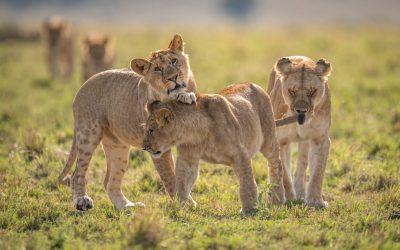
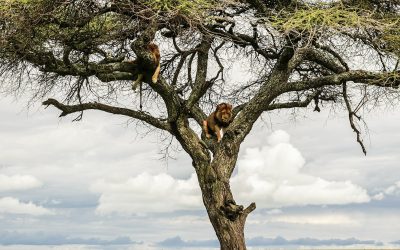
Tree-Climbing Lions are Lake Manyara’s most famous and frequently discussed wildlife phenomenon. Lions that climb trees are rare in Africa — it is a behavior recorded reliably in only a handful of locations worldwide — yet Manyara’s lions do it regularly, draping themselves across the broad branches of acacia and sausage trees with an improbable, languid elegance. The behavior is thought to be driven by a combination of factors including the need to escape ground-level insects, to catch cooling breezes, and possibly simply by individual habit. Whatever the reason, the sight of a lion gazing down at you from the branches of a tree is genuinely extraordinary and one of Manyara’s most sought-after sightings.
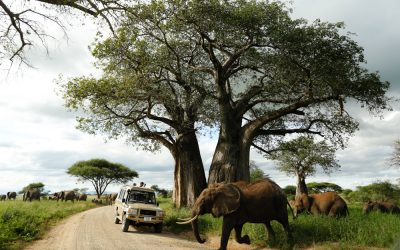
Elephants move through the park’s forest and floodplain habitats in family groups, often approaching remarkably close to vehicles. Manyara’s elephants have a reputation for being among the most relaxed and vehicle-habituated in Tanzania, making close-range encounters frequent and deeply memorable.
Hippos gather in the shallower sections of the lake and in the hippo pools near the park’s southern boundary. Early morning visits to the hippo pools — when the animals are most active and vocalizations carry across the still water — are a highlight of any Manyara game drive.
Cape Buffalo graze the open floodplains in large herds, often accompanied by oxpeckers and yellow-billed egrets. The floodplain buffalo herds at Manyara can number several hundred individuals and are a dramatic spectacle against the backdrop of the Rift Valley escarpment.
Baboon troops are a constant and entertaining presence throughout the forest and woodland areas. Manyara supports one of the highest baboon densities in Tanzania, and observing their complex social interactions — grooming sessions, infant care, dominance displays, and occasional conflict — provides an endlessly engaging sideshow to the larger wildlife drama.
Flamingos gather along the lake’s shore in numbers that vary dramatically with water levels and food availability. In good years, tens of thousands of lesser and greater flamingos form a pink, shimmering fringe along the alkaline shallows — one of the most visually stunning sights in East Africa. Pelicans, storks, herons, and a vast variety of wading birds join them along the shore, making the lake edge a birdwatcher’s paradise.
Birdlife across the park as a whole is exceptional. Over 400 species have been recorded within Lake Manyara’s compact boundaries, making it one of East Africa’s premier birding destinations. Manyara is particularly celebrated for its waterbirds — yellow-billed storks, African spoonbills, great white pelicans, various species of egret and heron, and the magnificent African fish eagle whose call is the defining sound of African waterways.
The Great Rift Valley — A Window Into the Earth’s History
Standing at the Lake Manyara viewpoint on the escarpment above the park and looking out over the valley below is one of the great perspective-altering experiences of any East Africa journey. The Great Rift Valley — the vast geological scar that runs for over 6,000 kilometers from Lebanon in the north to Mozambique in the south — is visible in its full, breathtaking scale from this vantage point, with Lake Manyara glittering far below and the Serengeti plains stretching toward the horizon in the west.
The Rift Valley was formed by tectonic forces pulling the African continent slowly apart — a process that has been underway for around 25 million years and continues today. The volcanoes, lakes, escarpments, and hot springs of Tanzania’s northern circuit are all products of this extraordinary geological process. Understanding the Rift Valley adds an entirely new dimension to the safari experience, placing the wildlife and landscapes you encounter within a story of planetary scale and geological time.
Canopy Walkway — A Bird’s Eye View of the Forest
One of Lake Manyara’s most unique experiences is its canopy walkway — a suspended wooden platform and bridge system that carries visitors up into the forest canopy above the groundwater forest floor. Walking among the upper branches of the fig and mahogany trees, surrounded by birdsong and dappled light, with occasional glimpses of elephants moving through the undergrowth below, is a perspective on the African forest that very few safari travelers ever experience.
The canopy walkway is available as an add-on to standard game drive itineraries and is particularly recommended for birding enthusiasts and those traveling with children, who invariably find it one of the most exciting experiences of their entire trip.
Best Time to Visit Lake Manyara
Lake Manyara’s small size and habitat diversity make it a rewarding destination in every month of the year. The dry season from June to October brings the most reliable general game viewing, with animals concentrated around the lake shore and permanent water sources. The wet season from November to May brings extraordinary birdlife — particularly during the November to April period when Palaearctic migrants augment the resident species — and lush, green landscapes of great beauty.
Flamingo numbers on the lake are highest when water levels are low enough to concentrate the alkaline conditions that support the algae and crustaceans on which they feed — typically during the drier months, though this varies year to year. It is always worth checking current conditions with our team before finalizing your visit dates.
Getting to Lake Manyara
Lake Manyara National Park is located approximately 130 kilometers southwest of Arusha — a drive of roughly two hours along the main northern circuit road. The park lies just beyond the town of Mto wa Mbu, a vibrant and colorful market town worth a brief stop in its own right. The town’s name means “River of Mosquitoes” in Swahili — a reminder to pack your insect repellent — and its market offers an excellent introduction to the agricultural and cultural diversity of the Rift Valley region.
A domestic airstrip at Manyara provides light aircraft access for those connecting from the Serengeti, Tarangire, or Kilimanjaro International Airport.
Accommodation at Lake Manyara
Accommodation options around Lake Manyara range from lodges dramatically perched on the escarpment above the park — offering some of the most spectacular views in northern Tanzania — to intimate camps within the park itself and comfortable lodges near the gate. Escarpment lodges offer the unique experience of watching the sun set over the lake far below while sitting on a terrace above the clouds — an experience of rare, cinematic beauty.
Ready to Discover Manyara’s Magic?
Lake Manyara proves that size is no measure of significance. This small, endlessly surprising park has a way of delivering moments that stay with you long after you’ve moved on to larger destinations — a lion watching you calmly from the branches above, a thousand flamingos lifting from the lake in a single pink cloud, an elephant emerging silently from the forest ten meters from your vehicle.
Explore our Lake Manyara safari packages or contact our team to include this extraordinary park in your Tanzania itinerary.
Serengeti Wander Tours | Based in Arusha, Tanzania | www.serengetiwandertours.com
Frequently Asked Questions — Lake Manyara National Park
How long does a Lake Manyara game drive take? A standard game drive circuit through the park takes approximately four to five hours and covers the main forest, floodplain, and lake shore habitats. The park is best visited as a half-day or full-day experience and is frequently combined with an afternoon drive in Tarangire or an onward journey to Ngorongoro.
Will I see tree-climbing lions at Lake Manyara? Tree-climbing lion sightings are never guaranteed, but Manyara is one of the most reliable locations in Africa for this behavior. Our guides know the areas and acacia groves where lions are most frequently found in the trees and will prioritize these areas during your game drive.
Is Lake Manyara good for birdwatching? Exceptional. With over 400 recorded species and outstanding waterbird populations on the lake shore, Manyara is one of the finest birding destinations on the northern circuit. We can arrange specialist birding game drives with guides experienced in avian identification.
Can I combine Lake Manyara with Tarangire in one day? It is possible to visit both parks in a single long day, though we recommend spending at least one night between them to allow for early morning game drives in each. Our team can design a seamless two-park itinerary that maximizes your time in both.
Photo Gallery:
Find Inspiration for
Your Next Tanzania Safari
Explore a range of private and group safari packages tailored to families, couples, and adventurers seeking unforgettable wildlife encounters.
- From: $2105 / person
- From: $2100 / person
- From: $2100 / person
- From: $4105 / person
- From: $5335 / person
- From: $4105 / person
- From: $3250 / person
- From: $2720 / person